Showing posts with label libraries. Show all posts

Monday, May 13, 2024

Google Books


With innovative technology created in what seems like daily, the demographic of library users also begins to change to “Digital Natives” (Rodenby). I believe libraries should continue to evolve with technology to serve the digital community.

Enter Google Books, which has been around for some time, and since 2004 along with partner libraries made millions of scanned digital copies of books to be easily searched through (“Google”). It seemed to me that it would be copyright infringement, however the U.S. 2nd Circuit Court of Appeals did not see it that way. The court ruled it was “fair use” because Google Books only used text from the scanned books to create an easy search for similar text sources (Google). Compared to searching with only keywords, Google Books lets you search using terms and provides you “snippets” of books, but even Google Books has restrictions.

A benefit for the library partner is Google Books provides them with a scanned digitized copy of the physical book (Koonce). Some libraries have begun creating their digitized collections, and it takes time, money, and labor to complete. 

Works Cited

Carter, Dave. “Google Scanning @ AAEL.” Flickr, Jan. 19,2008, https://flic.kr/p/4mGhNM

"Google, books and 'fair use'." Los Angeles Times, Apr 19, 2016. ProQuest, https://login.ezproxy.palomar.edu/login?auth=shibboleth&url=https://www.proquest.com/newspapers/google-books-fair-use/docview/1781719213/se-2.

Koonce, Lance. "Another page in the Google books saga: appeals court blesses mass digitization project as fair use." Intellectual Property & Technology Law Journal, vol. 28, no. 2, Feb. 2016, pp. 20+. Gale In Context: Opposing Viewpoints, link.gale.com/apps/doc/A442782069/OVIC?u=cclc_palomar&sid=bookmark-OVIC&xid=4a63b6c7. Accessed 13 May 2024.

Rodenby, Thomas. “Insider’s Perspective. (Cover Story).” Information Today, vol. 36, no. 3, Apr. 2019, pp. 8–9. EBSCOhost, search.ebscohost.com/login.aspx?direct=true&db=hch&AN=135938356&site=ehost-live&scope=site.Evaluation

Saturday, May 11, 2024

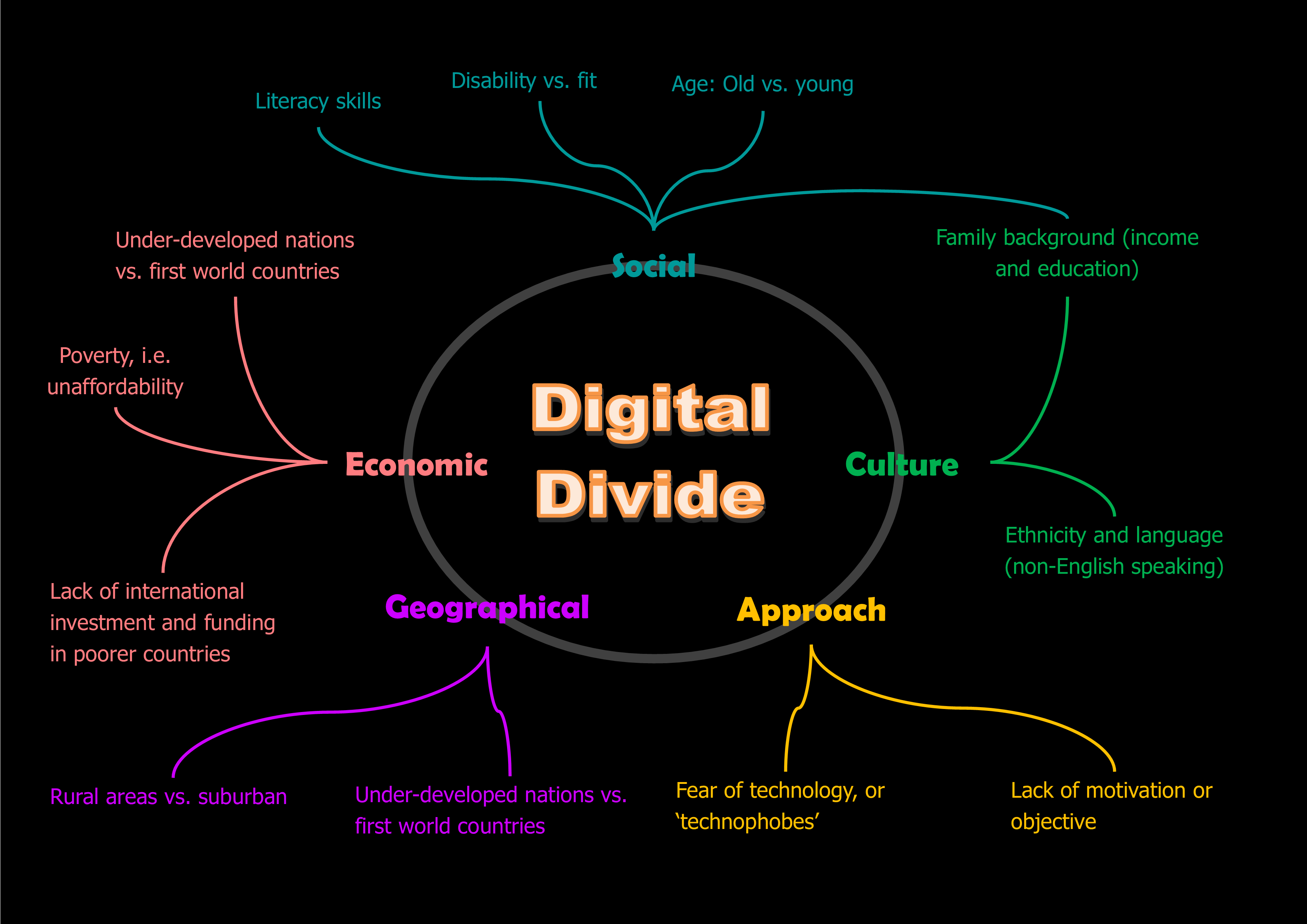
Libraries and the Digital Divide

(Reynolds)

Bridging the gap in the digital divide is an essential task that libraries undertake. Library users ranging from ages 0-80+ years old and socio-economic ranges that span just as wide, libraries must make it an objective to serve all. How do they do that, a lot of work that’s how. Libraries provide computer access, wireless internet access, laptops, and some libraries even have tablets to borrow.  In some libraries, users check out mobile hotspots because they do not have internet access at home (Lee King).

Individuals with disabilities face challenges in social, economic, and educational settings and as “Baby Boomers” age they become susceptible to diseases that affect eyesight, joints, and cognitive functions, and numbers in this group are predicted to increase 100% by 2030 (Mates).  Libraries are digitally inclusive places, with access to digital resources, support, and skills providing users with the latest technologies at no cost. Users who may not have had access previously can benefit from their public library.

By: Estela Perez

Works Cited
Lee King, David. “Chapter 4: The Digital Divide.” Library Technology Reports, vol. 57, no. 2, Feb. 2021, pp. 24–28. EBSCOhost, search.ebscohost.com/login.aspx?direct=true&db=f6h&AN=148951874&site=ehost-live&scope=site.

Mates, Barbara T., and Char Booth. “Information Power to All Patrons.” Library Technology Reports, vol. 48, no. 7, Oct. 2012, pp. 7–13. EBSCOhost, search.ebscohost.com/login.aspx?direct=true&db=a9h&AN=83242900&site=ehost-live&scope=site.

Reynolds, Dennis. “Digital Divide Part 2” Dennis Reynolds, 29 Jan. 2016, PennStatesites.psu.edu/dennisreynolds/2016/01/29/digital-divide-part-2/.  Accessed 11 May 2024

Gadget-Adding a List Gadget

On this blog, I chose to add a list gadget to the right side of the page. It provides links to organizations that can assist libraries in pr...